Scrap & Remelt Quality: Verifying What’s Really in the Metal
Published on: April 10, 2026
Categories: Materials Testing
In today’s metals markets, what’s in your scrap matters just as much as how much you pay for it. With rising demand for recycled aluminum driven by supply pressures, tariff impacts, and sustainability goals, uncertainty in scrap quality is a major source of cost, risk, and disputes across the supply chain.
Whether you’re a scrap buyer, secondary aluminum producer, foundry, mill, or procurement professional, verifying material inputs before remelt plays a key role in controlling metal quality and performance.
WHY SCRAP METAL QUALITY TESTING MATTERS
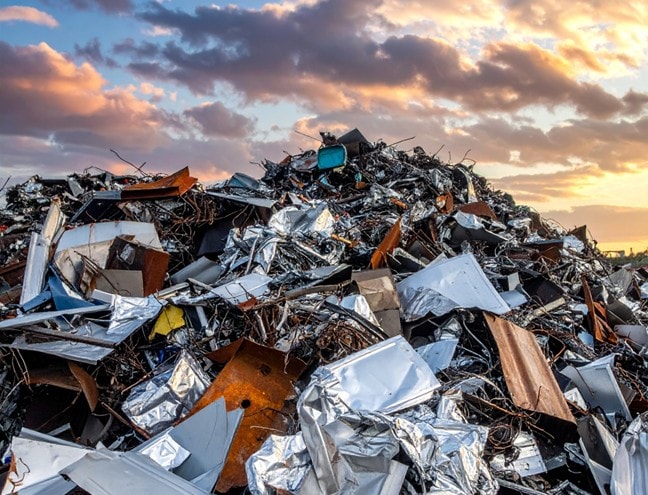
Scrap aluminum doesn’t arrive in pristine, ready-to-remelt form. It’s a mix of alloys, coatings, contaminants, and uncertainties. Without accurate verification:
- Off-spec chemistry can lead to downgrading or diluting heats.
- Lower yield and unpredictable remelt behavior.
- Disputes between buyers and sellers become common when scrap doesn’t match expectations.
- Charging of materials that can contaminate your melting and casting system.
All of these issues will equate to added costs in a low-margin industry. Visual inspection, x-ray fluorescence (XRF), or laser induced breakdown spectroscopy (LIBS) detection alone is not enough. Comprehensive testing that Secat provides is needed to reduce uncertainty before metal ever reaches the furnace.
MARKET FORCES INCREASING THE STAKES
Recent market and policy dynamics are amplifying the importance of scrap verification:
- Tariff structures have increased the attractiveness of recycled aluminum, making scrap a preferred feedstock.
- Secondary aluminum production uses significantly less energy than primary aluminum, supporting both cost and sustainability goals.
- Geopolitical conflicts can disrupt primary aluminum supply chains.
WHAT SCRAP VERIFICATION TESTING ACTUALLY DOES
Remelting representative scrap samples provides a more accurate picture of true melt chemistry under real processing conditions. Pilot-scale remelt trials allow evaluation of elemental shifts that may occur during melting, including losses due to oxidation, volatilization, or partitioning into dross. This approach verifies not just incoming chemistry, but the chemistry that will ultimately be realized in production.
Remelt trials also evaluate metal recovery after the removal of moisture, organics, coatings, and surface oxidation. By measuring pre- and post-remelt chemistry and yield, producers gain insight into expected recovery rates, alloy adjustment requirements, and overall melt efficiency before committing full-scale furnace capacity.
Chemical Composition Analysis
Elemental analysis from buttons taken from small remelt batches confirms whether scrap matches intended alloy and specifications. Optical Emission Spectroscopy (OES) and similar methods provide precise chemistry data to support blending and alloy correction decisions.
Contaminant Identification
Organic substances such as hoses, coatings, and lubricants can negatively impact melt quality and recovery. Early identification of these risks helps prevent production disruptions and reduces uncertainty prior to full-scale melting.
Dross Analysis
Dross analysis provides additional insight into process efficiency and metal loss. Evaluating the amount of recoverable metal contained within the dross helps quantify yield impact and identify opportunities to optimize charge practices. Understanding both realized chemistry and dross metal content enables more accurate cost forecasting and improved melt performance.
REAL-WORLD CONSEQUENCES OF UNVERIFIED SCRAP
Unverified scrap often leads to unexpected chemistries, lower recovery rates, schedule disruptions, and disputes between suppliers and customers. Most of these issues stem from gaps between assumed and actual quality—gaps that Secat’s testing can close.
THE SECAT ADVANTAGE
Independent validation is critical in a market increasingly dependent on secondary aluminum. Secat, Inc. provides independent scrap verification services designed to reduce risk and improve confidence before full-scale remelt.
Our capabilities include:
- Independent chemistry testing using industry-standard analytical methods.
- Pilot-scale remelt trials to validate real-world melt performance.
- Clear, actionable reporting that supports procurement and production decisions.
By validating scrap quality before it enters production, Secat helps organizations minimize uncertainty, protect margins, and strengthen supplier relationships. Contact us today.
Request a Quote!
Secat's expert team will be happy to accomodate any special requests for your project. We also recommend checking out our FAQs and resource pages for additional info.
Secat is a metallurgical research laboratory specializing in aluminum product and process technologies with ISO 17025:2017 certification. Secat has technical and marketing capabilities to serve various aluminum product sectors including: automotive, marine, aerospace, packaging, building & construction, electrical, and recycling.