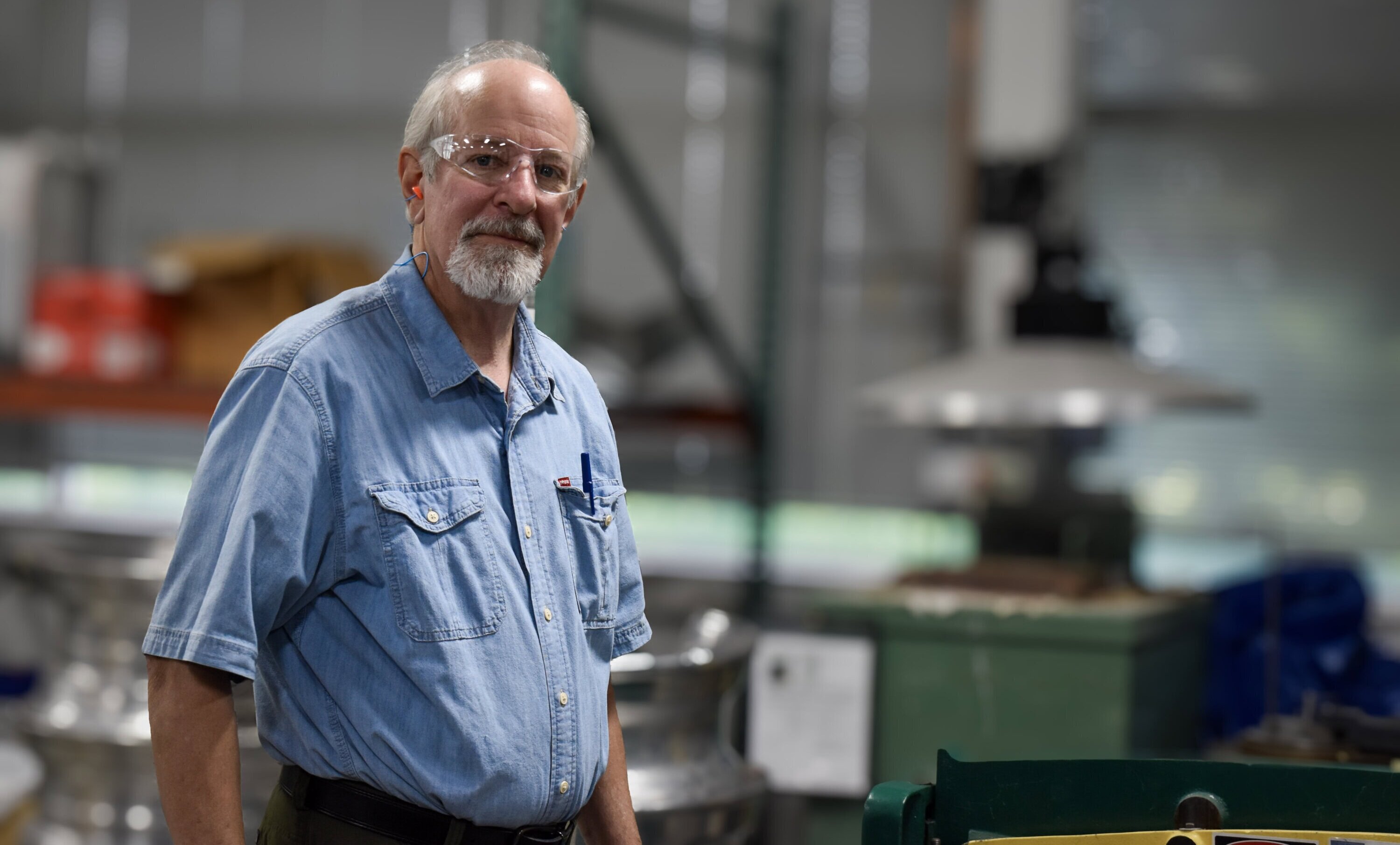
Meet Scott Goodrich: Four Decades of Aluminum Rolling Experience, Still Solving What Comes Next
When Scott Goodrich began his career, he was not planning to become an aluminum rolling expert. He started in nuclear engineering, studying and working on reactors and the resultant radiation damage that embrittles their components. That issue sparked a deeper interest in how materials behave—and ultimately led him to metallurgy.
At school, Scott served as a teaching assistant in the foundry laboratory, where he collected and melted scrap such as beverage cans, cast the aluminum into small bars and then rolled them. At the same time, he worked with a professor specializing in crystallographic texture and formability. After graduation, and in the wake of the Three Mile Island accident, Scott chose metallurgy over nuclear engineering. His interest in airplanes and experience with aluminum alloys helped point him toward the aluminum industry.
More than 40 years later, he is still drawn to the same thing: difficult problems worth solving.
Learning Rolling from the Inside Out
Scott began as a process engineer in the casting department of a large rolling mill before moving into cold rolling. One of his early projects was the modernization of a single-stand mill with an automation package that included his company’s first flatness-control system. He later joined the team responsible for automating a five-stand hot mill.
Those projects required more than applying equations. The team had to translate rolling theory, operator knowledge, and standard operating practices into the control software—all while keeping the mill safe, productive, competitive, and capable of meeting customer requirements.
“Like many complicated subjects, the view from afar seems simple,” Scott says. Once inside the process, however, metallurgy is only one part of the picture. Roll deflection, thermal crown, mill stretch, lubrication, heat transfer, surface quality, automation, maintenance, safety, and productivity all affect the outcome.
Over the years, Scott served as a product metallurgist, senior and staff metallurgist, R&D manager, laboratory manager, and technical director. He spent the final nine years of his corporate career with Constellium and previously worked for plants or companies that became part of Constellium, including Alcan, Pechiney, Ravenswood Aluminum, Century Aluminum, and Kaiser Aluminum.
A Career Built Around Products—and People
Scott entered the industry during a period of major investment and technological change. He worked on casting improvements using SNIF degassing and ceramic foam filtration, mill automation, and products that had to meet demanding customer requirements.
His career included work connected to aerospace plate for Boeing and Airbus, material for the Space Shuttle fuel tank, automotive brazing sheet, beverage can stock, and bright 5xxx-series sheet used for tanker and dump trucks. He also spent time at a corporate research laboratory in France, where he learned to communicate in French and lead the processing laboratory team within a different culture.
Yet when Scott talks about those accomplishments, he is quick to shift the credit toward the teams behind them.
“No one person is solely responsible for success,” he says. Across his career, professors, supervisors, customer engineers, suppliers, technicians, operators, and plant leaders each brought knowledge that helped projects succeed.
That respect for hands-on experience still shapes how he works. His advice to his younger self is simple: listen more to the experts, learn from plant operators and supervisors, write down what you learn, and be patient. Insight and knowledge can come from many unexpected places.
Why Consulting and Why Secat?
Before leaving Constellium, Scott found himself wanting to step away from administrative demands and return to the technical work he most enjoyed. Consulting offered the opportunity to choose meaningful projects, work directly with teams, and focus on solving difficult metallurgical and manufacturing problems.
“Usually, there is a hard problem that the local team has been having difficulty solving,” he explains. That is where an outside consultant can be useful: another set of eyes, another person to question assumptions, and someone who can stay with the team beyond the diagnosis and through the fix.
As an external consultant to Secat, Scott helps teams connect alloy chemistry and processing to microstructure and final properties. He can step into a stubborn problem, help move a new product from development into production, or lend a hand when the technical team is stretched thin.
He also enjoys teaching. Scott wants engineers and metallurgists who are new to aluminum to understand not only which process parameters need to be controlled, but why the metallurgical “recipe” works. A small process change can make a very real difference in the finished product.
Preserving Knowledge for the Next Generation
Scott believes a great metallurgist never stops learning—and never works in isolation. Technical knowledge matters, but so do teamwork, curiosity, healthy skepticism, and the willingness to look beyond one’s own specialty.
That matters as mills use more scrap, collect more data, and rely more heavily on automation and predictive tools. Scott believes those tools work best when they are paired with the hard-earned process knowledge already inside the plant.
For Scott, consulting and teaching are both ways to pass that knowledge forward. He teaches several courses at Secat, sharing lessons from more than four decades in aluminum rolling with engineers, metallurgists, and others working in the industry. Aluminum metallurgy is a relatively small community, and the relationships he has built with colleagues, customers, mentors, operators, and students have been among the most rewarding parts of his career.
Outside of aluminum, Scott has been a distance runner since age 14 and a cyclist since age 20. He also plays blues and rock-and-roll guitar and enjoys spending time with his two grandchildren. He may move at a different pace than he once did, but his curiosity has not slowed down.
There are always new challenges, new technologies, and new problems to solve. That is precisely what keeps the work interesting.
Connect with Secat’s Consulting Experts
Scott brings an unusual mix to Secat: years in the plant, a deep understanding of the science, product-development experience, and a genuine preference for solving problems with a team.
Scott is one member of Secat’s consulting team. Our internal and external consultants come from different corners of the aluminum industry, with backgrounds in metallurgy, manufacturing, product development, failure analysis, testing, and plant problem-solving. That range matters: it means we can bring the right people to the table for the problem at hand.
Request a Quote!
Secat's expert team will be happy to accomodate any special requests for your project. We also recommend checking out our FAQs and resource pages for additional info.
Secat is a metallurgical research laboratory specializing in aluminum product and process technologies with ISO 17025:2017 certification. Secat has technical and marketing capabilities to serve various aluminum product sectors including: automotive, marine, aerospace, packaging, building & construction, electrical, and recycling.