What Is Additive Friction Stir Deposition (AFSD)?
Published on: July 29, 2026
Categories: AFSD, FSD, Uncategorized
What Is Additive Friction Stir Deposition (AFSD)?
A New Approach to Aluminum Manufacturing
As manufacturers continue looking for ways to improve material performance, reduce
waste, and get more value from existing resources, one technology continues to gain attention: Additive Friction Stir Deposition (AFSD).
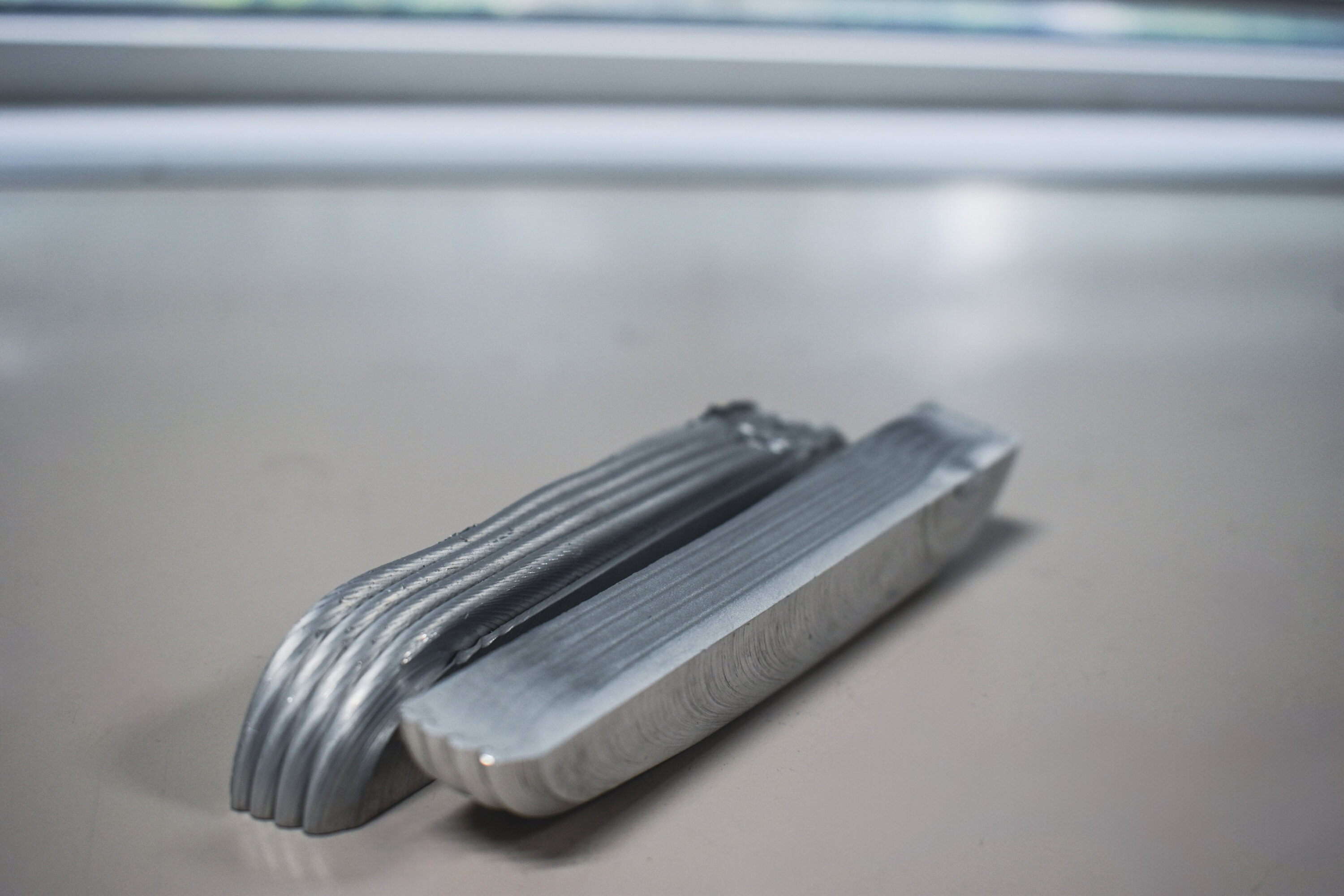
Derived from friction stir welding technology, AFSD is a solid-state additive manufacturing process that builds or repairs metal components without ever melting the material.
That may sound like a small distinction, but for aluminum manufacturers it’s significant. Many of the defects engineers work to avoid—porosity, hot cracking, and distortion, to name a few—are tied to melting and solidification. By eliminating that step, AFSD offers a different approach to manufacturing and repair that is generating interest across aerospace, defense, transportation, and other industries.
Today, companies such as MELD Manufacturing are helping advance AFSD technology and demonstrate its potential for real-world manufacturing applications.
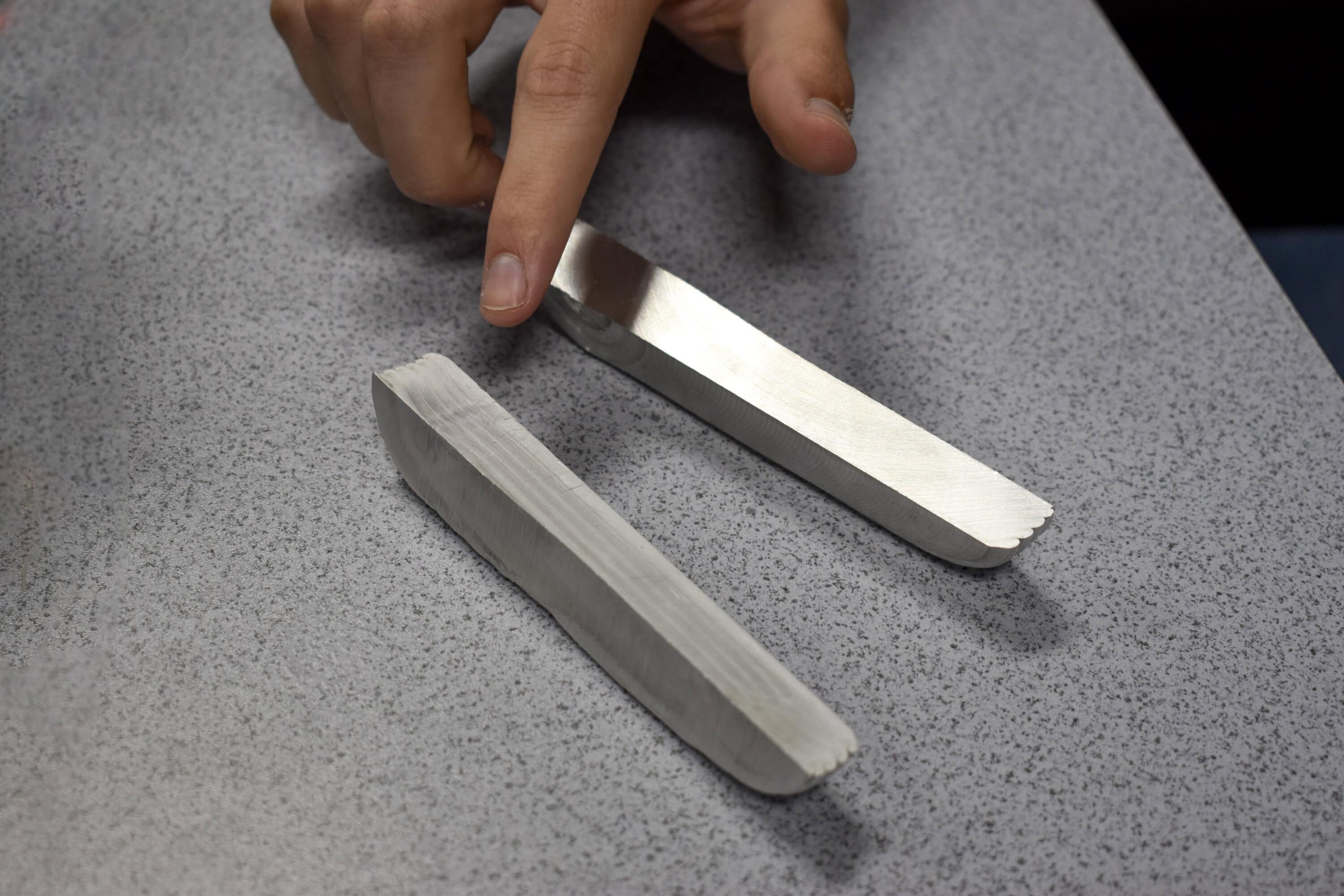
Visible deposition layers show how AFSD builds components one solid-state layer at a time without remelting the material.
What Is Additive Friction Stir Deposition?
AFSD uses frictional heat and pressure to plasticize metal feedstock and deposit it layer by layer. Unlike fusion-based additive manufacturing processes, the material remains below its melting temperature throughout deposition.
Instead of creating a melt pool, AFSD relies on severe plastic deformation and material flow to form a fully dense deposit. The result is a metallurgically bonded structure that avoids many of the challenges associated with melting and resolidification.
For manufacturers used to traditional welding or additive manufacturing processes, it’s a fundamentally different way of thinking about how material can be added, repaired, or reshaped.
Why AFSD Is Important for Aluminum
Aluminum is widely used across industries, but it can be difficult to process when melting is involved. Oxidation, hydrogen, porosity, hot cracking, and distortion are all common concerns in fusion-based manufacturing.
AFSD helps address many of these issues because the material never enters a liquid state.
Reduced Defects
Because the process remains solid-state throughout deposition, AFSD can significantly reduce:
- Porosity
- Hot cracking
- Solidification-related defects
- Distortion associated with thermal cycling
For many engineers, that alone is enough to take a closer look.
Enhanced Material Properties
Solid-state processing often produces:
- Fine grain structures
- Strong bonding between deposited layers
- Uniform microstructures
- Excellent mechanical performance
The result is material behavior that can be difficult to achieve with fusion-based approaches.
Processing of High-Strength Alloys
Some of the highest-performing aluminum alloys, such as AA7050, are also some of the most difficult to weld or process using traditional additive manufacturing technologies.
AFSD offers an alternative path for these materials, which is why it continues to draw interest in aerospace and defense applications where performance margins matter.
Opportunities for Recycled and Alternative Feedstocks
Manufacturers are also taking a closer look at how recycled and developmental materials fit into future production strategies.
AFSD won’t solve every challenge tied to recycled content, but it does open the door to using a broader range of feedstock inputs while reducing scrap and improving material efficiency. For example, AFSD could be used to break down the course Fe-based constituents that often degrade fracture toughness.
Where AFSD Is Being Used
Industries including aerospace, defense, transportation, and energy are actively exploring AFSD for applications such as:
- Repairing high-value components
- Restoring worn or damaged surfaces
- Manufacturing large structural components
- Producing near-net-shape parts
- Extending service life of critical parts
- Reducing material waste
In many cases, the goal isn’t just to build something new—it’s to recover value from existing materials and reduce the cost of replacement or scrap.
Supporting AFSD Development Through Pilot-Scale Manufacturing
As AFSD continues to gain traction, manufacturers need access to feedstock materials and pilot-scale processing capabilities that allow them to evaluate ideas before moving into full production environments.
At Secat, we’re seeing increased interest in AFSD from companies exploring new alloy chemistries, recycled materials, and advanced manufacturing technologies.
Our Nicholasville Pilot Scale Facility is uniquely positioned to support those efforts.
With pilot-scale casting, billet production, extrusion, and forging capabilities, manufacturers can evaluate materials and processes in an environment that bridges the gap between laboratory research and commercial production.
Custom Feedstock Development
One of the key challenges in emerging manufacturing technologies is simply getting the right material in the right form for development work.
Secat can produce custom aluminum alloys to support research, product development, and manufacturing evaluations.
Through our pilot-scale casting capabilities, we can produce custom aluminum billets and developmental alloys for advanced manufacturing applications. This includes support for new alloy chemistries, recycled-content evaluations, and process development work where material behavior needs to be understood before scaling.
Whether the goal is to explore a new alloy system or evaluate alternative feedstock sources, pilot-scale production provides a practical way to reduce uncertainty early in development.
Pilot-Scale Casting and Processing
Our pilot-scale facility bridges the gap between laboratory-scale research and commercial production.
With casting, extrusion, and materials processing capabilities, manufacturers can better understand how materials behave before transitioning to full-scale manufacturing environments. This helps reduce development risk and improves confidence when scaling new processes.
The Opportunity Ahead
AFSD represents a meaningful shift in how aluminum components can be manufactured, repaired, and reused.
While the technology is still evolving, it’s already drawing attention from industries focused on performance, efficiency, and sustainability.
As adoption grows, access to pilot-scale processing, feedstock development, and practical manufacturing expertise will be key to moving concepts from early-stage development into real-world applications. And Secat can help!
Learn More About Secat’s Pilot Scale Capabilities
Whether you’re evaluating AFSD, developing custom feedstock materials, exploring recycled-content opportunities, or investigating advanced aluminum processing methods, Secat’s Pilot Scale Facility can support your next project.
Contact Secat to learn more about how our pilot-scale capabilities can help advance your material development and manufacturing goals.
Request a Quote!
Secat's expert team will be happy to accomodate any special requests for your project. We also recommend checking out our FAQs and resource pages for additional info.

Secat is a metallurgical research laboratory specializing in aluminum product and process technologies with ISO 17025:2017 certification. Secat has technical and marketing capabilities to serve various aluminum product sectors including: automotive, marine, aerospace, packaging, building & construction, electrical, and recycling.