The 6 Most Common Aluminum Rolling Defects (and How to Prevent Them)
Published on: October 12, 2026
Categories: Uncategorized
Producing high-quality rolled aluminum requires far more than reducing material thickness. Anyone who has worked in a rolling mill knows that even small changes in process conditions can quickly affect strip quality. From casting and homogenization to hot rolling, cold rolling, and finishing, every step plays a critical role in the quality and performance of the final product.
When process variables fall outside acceptable limits, aluminum rolling defects can develop that affect surface quality, dimensional accuracy, flatness, mechanical properties, and overall product performance. The result is often increased scrap, production delays, customer complaints, and higher manufacturing costs.
The good news is that many rolling defects are predictable—and preventable. Understanding what causes them is the first step toward improving product quality, reducing waste, and increasing process efficiency.
To bring a practical, plant-level perspective to this guide, Secat drew on insights from Scott Goodrich, an external technical consultant with more than four decades of experience in aluminum rolling, metallurgy, mill automation, product development, and plant problem-solving. Scott’s perspective is grounded in a career spent not only studying aluminum, but also working alongside the engineers, operators, technicians, and customers responsible for making demanding products succeed.
Why Do Aluminum Rolling Defects Occur?
Rolling defects are rarely caused by a single issue. Instead, they are typically the result of multiple interacting factors, including material characteristics, equipment condition, rolling parameters, lubrication, temperature control, and strip handling.
Some of the most common contributors include:
- Improper rolling reductions
- Inconsistent strip tension
- Inadequate lubrication
- Roll wear or damage
- Variations in incoming material quality
- Incorrect rolling temperatures
- Alloy chemistry inconsistencies
- Equipment alignment issues
- Sensor calibration
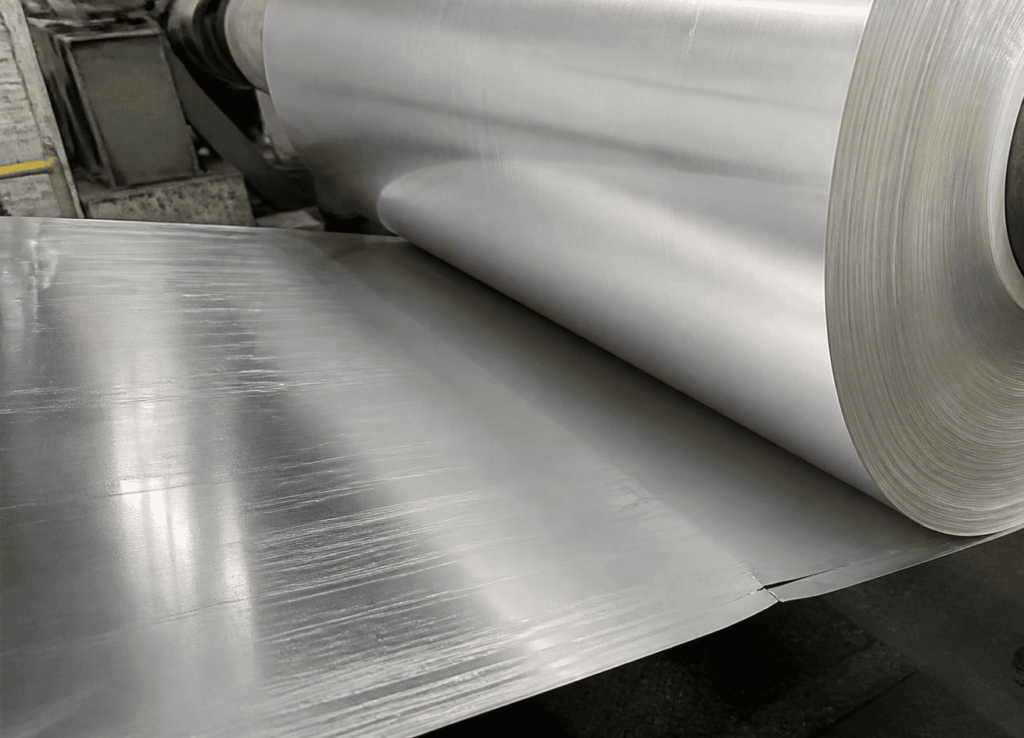
Because these variables influence one another, identifying the root cause often requires both metallurgical expertise and a solid understanding of rolling process fundamentals.
The following six categories—edge cracks, flatness defects, gauge variation, roll marks, stains, and scratches—account for well over 90 percent of observed aluminum rolling defects.
Scott often reminds engineers that rolling looks simpler from a distance than it does from inside a mill. In practice, metallurgy, mechanics, lubrication, automation, safety, quality, and productivity all intersect. That is why the same visible defect can have several possible causes—and why the experience of operators and supervisors is so valuable during an investigation.
-
Edge Cracks
Edge cracks develop along the edges of the strip during deformation and may continue to grow as additional rolling reductions are applied. This defect not only increases scrap but can also interrupt production and reduce overall mill efficiency.
Common Causes
- Excessive reduction per pass
- Segregation of embrittling elements such as sodium
- Low material ductility
- Variations in rolling temperature
- Pre-existing casting defects, including inclusions or casting surface defects on ingot edges
Prevention
Optimizing rolling schedules, verifying ingot quality, controlling alloy chemistry, and maintaining proper rolling temperatures can all help reduce the risk of edge cracking.
Catching edge cracks early can prevent an entire coil from being downgraded or scrapped, making routine inspection an important part of quality control.
-
Flatness Defects
Flatness defects occur when different areas across the strip width undergo unequal elongation. Even when thickness remains within specification, these differences can create waves, buckles, or tight areas that cause problems during subsequent rolling, coiling, slitting, forming, and other downstream operations.
Common types of flatness defects include:
- Center buckle: The center of the strip width is longer than the edges, producing waves through the middle.
- Edge wave: One or both edges are longer than the center, producing waves along the strip edges.
- Tight edge: One or both edges are shorter than adjacent areas, creating uneven tension across the strip width. On thin sheet, a tight edge can be very narrow and difficult to see while rolling under tension and could result in propagation of edge cracks or strip breaks.
- Quarter buckle: Localized waves develop between the strip center and edges, often near the quarter-width positions.
- Localized waviness: Uneven elongation is concentrated in a specific area rather than distributed symmetrically across the strip.
Common Causes
- Improper roll crown or roll profile
- Incorrect roll bending setting
- Roll deflection
- Thermal expansion of rolls or uneven temperature distribution across the rolls
- Uneven reduction across the strip width
- Mill alignment issues
- Inadequate flatness measurement or control
Prevention
Proper roll grinding and mill maintenance, appropriate crown and bending settings, consistent temperature control, and active flatness measurement and control systems that help maintain uniform elongation across the strip width.
Because several different flatness patterns may arise from similar mill conditions, the location and shape of the defect provide important clues during root cause analysis.
-
Gauge Variation
Maintaining consistent strip thickness is one of the primary objectives of any rolling operation. Gauge variation can lead to processing problems, customer rejections, inconsistent product performance, and material that falls outside dimensional tolerances.
Common Causes
- Mill instability
- Hydraulic control issues
- Variable rolling force
- Equipment wear, including backup rolls
- Improper process settings
- Variations in incoming gauge or material properties
- Inconsistent strip tension or rolling speed
- Thickness gauges out of calibration
Prevention
Automatic gauge control systems, routine equipment calibration, stable rolling parameters, and preventive maintenance programs help maintain thickness consistency throughout production.
When diagnosing gauge variation, it is also important to examine where the variation occurs—across the strip width, along its length, or at specific points in the coil—as each pattern may indicate a different source.
-
Roll Marks
Roll marks are repeating or patterned surface impressions transferred to the strip by a work roll or another roll that contacts the material. Because the defect repeats according to the circumference of the affected roll, its spacing can help identify the source.
Common Causes
- Damaged, worn, or improperly ground rolls
- Debris or aluminum pickup adhering to a roll surface
- Foreign material passing through the roll bite
- Roll surface contamination
- Mechanical damage to roll-contacting equipment
Prevention
Regular roll inspection and cleaning, proper roll grinding, control of aluminum pickup, and prompt removal of foreign material can reduce roll marks. Measuring the distance between repeating marks and comparing it with roll circumferences can help isolate the affected roll more quickly.
-
Stains
Stains are areas of discoloration or uneven appearance on the aluminum surface. They may develop during rolling, cleaning, storage, or handling and can range from cosmetic changes to evidence of chemical or moisture-related surface attack.
Common Causes
- Residual rolling oil or cleaner on the strip
- Contaminated lubricant or coolant
- Inadequate rinsing or drying
- Moisture trapped between coil wraps
- Water quality or chemical concentration issues
- Improper storage conditions or condensation
- Inadequate inert atmosphere control for thermal operations after rolling
Prevention
Maintaining clean and properly controlled rolling fluids, monitoring cleaning and rinsing systems, ensuring complete drying, and protecting coils from moisture and condensation can help prevent staining.
Because stains may appear after the process that caused them, investigators should review rolling, cleaning, handling, packaging, and storage conditions—not just the operation where the discoloration was first discovered.
-
Scratches
Scratches are linear surface defects created when the strip contacts a hard or abrasive object, or when adjacent surfaces move against one another. Unlike roll marks, scratches are often continuous or irregular rather than repeating at a fixed interval.
Common Causes
- Contact with guides, tables, guards, or other handling equipment
- Misaligned or damaged strip-contacting components
- Entrapped debris or metal particles
- Relative movement between coil wraps
- Improper threading, recoiling, or material handling
- Insufficient lubrication in areas of sliding contact
- Tension mismatching between the coiling operation and the next unwind operation
Prevention
Inspecting and aligning strip-contacting equipment, keeping process areas free of debris, maintaining proper strip tension, and using careful handling and coiling practices can reduce scratching.
The direction, location, and continuity of a scratch can help trace it back to the point of contact. Following the strip path systematically is often more effective than inspecting only the area where the defect was detected.
Why Root Cause Analysis Matters
It is tempting to correct the visible defect and move production forward, but that rarely solves the problem for long. In many cases, what appears during rolling actually began much earlier in the manufacturing process.
Scott describes effective consulting as more than finding a root cause. The real value comes from helping the local team select, implement, and sustain a permanent solution. Sometimes that begins with something as simple—and as useful—as bringing in an experienced extra set of eyes.
Variables such as alloy chemistry, casting quality, homogenization practices, lubrication, equipment condition, strip handling, and process control can all contribute to aluminum rolling defects. Understanding how these factors interact is essential to preventing the same issue from recurring.
A comprehensive investigation may include:
- Mechanical testing
- Materials characterization
- Metallographic analysis
- Chemical analysis
- Process evaluation
- Rolling parameter review
By understanding how metallurgy and manufacturing processes interact, manufacturers can reduce recurring defects, improve consistency, and increase productivity.
Scott also recommends that each operation maintain a plant-specific defect catalog with photographs, typical root causes, and proven countermeasures. A useful catalog captures local experience before it is lost and gives teams a practical starting point when a familiar defect returns.
How Secat Supports Aluminum Rolling Operations
For more than four decades, Secat has partnered with aluminum producers, rolling mills, and manufacturers to solve complex rolling challenges through technical expertise, laboratory testing, and process evaluation. Our materials testing and analysis capabilities include mechanical testing, materials characterization, chemical analysis, and metallographic and failure analysis. Secat also supports manufacturers through process evaluation, rolling parameter review, process optimization, technical training, and metallurgical consulting.
Every rolling operation encounters challenges from time to time. Whether you are troubleshooting recurring defects, evaluating a new alloy, optimizing rolling parameters, or improving strip quality, Secat works alongside manufacturers to develop practical, data-driven solutions that improve performance, reduce production costs, and strengthen process consistency.
Through his work with Secat, Scott contributes deep experience in rolling-process theory, chronic multidisciplinary problem-solving, product industrialization, and technical training for engineers and metallurgists who are newer to the aluminum industry.
Meet Scott Goodrich and learn more about the experience he brings to Secat and its customers.
Continue Building Your Rolling Expertise
Recognizing common aluminum rolling defects is an important first step, but understanding why they occur—and how process variables interact—is what leads to long-term improvements in quality and productivity.
Aluminum rolling is a complex process, and even experienced professionals continue learning as new alloys, equipment, and technologies evolve. That is why Secat is committed to sharing practical industry knowledge through our professional education programs.
If you would like to deepen your understanding of rolling mechanics, metallurgy, process control, and defect prevention, explore Secat’s Aluminum Rolling Course and other training opportunities on our Education & Training page.
Whether you are new to rolling operations or have years of industry experience, our courses are designed to provide practical knowledge you can immediately apply in your manufacturing environment. Contact Secat today.
Request a Quote!
Secat's expert team will be happy to accomodate any special requests for your project. We also recommend checking out our FAQs and resource pages for additional info.
Secat is a metallurgical research laboratory specializing in aluminum product and process technologies with ISO 17025:2017 certification. Secat has technical and marketing capabilities to serve various aluminum product sectors including: automotive, marine, aerospace, packaging, building & construction, electrical, and recycling.